Ongoing
consultations
Our work in the Congo depends on the trust of the people who live around the concessions.
Consultation with communities, customary landowners, authorities and other stakeholders is a continuous process, not a single event. It starts early and continues through every phase, in line with IFC Performance Standard 1 and Congolese law. Besides formal meetings, it includes informal visits and conversations in the villages. This website is one of the ways we share information about it. It does not replace direct contact with the communities, which takes place in person, in the villages and in the local languages.
Consultations
A selection of the formal and informal consultations held at the two projects.
Massangui, 2024
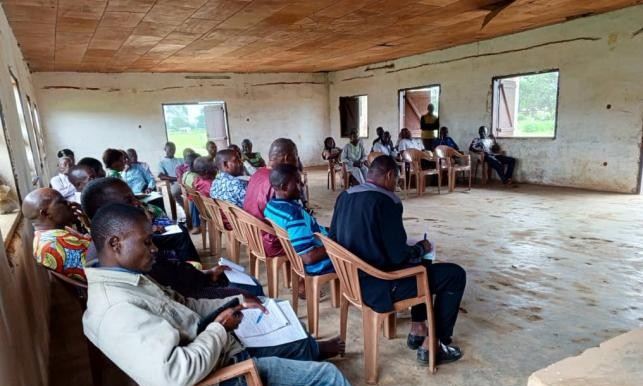
Meeting with the district authorities and village chiefs
At the start of the impact study, the sub-prefect, the local public services, neighbourhood and village chiefs and representatives of civil society were consulted at the district headquarters.
Massangui, 2024
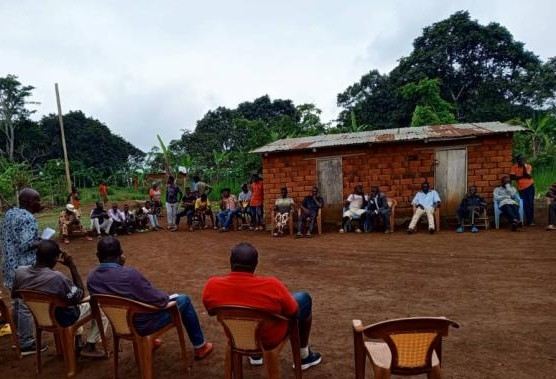
Group discussions in the villages
Residents were consulted in group discussions in their villages, together with a household survey. In 2025 the consultations reached fifteen settlements, with separate discussion groups for women.
Massangui, February 2025
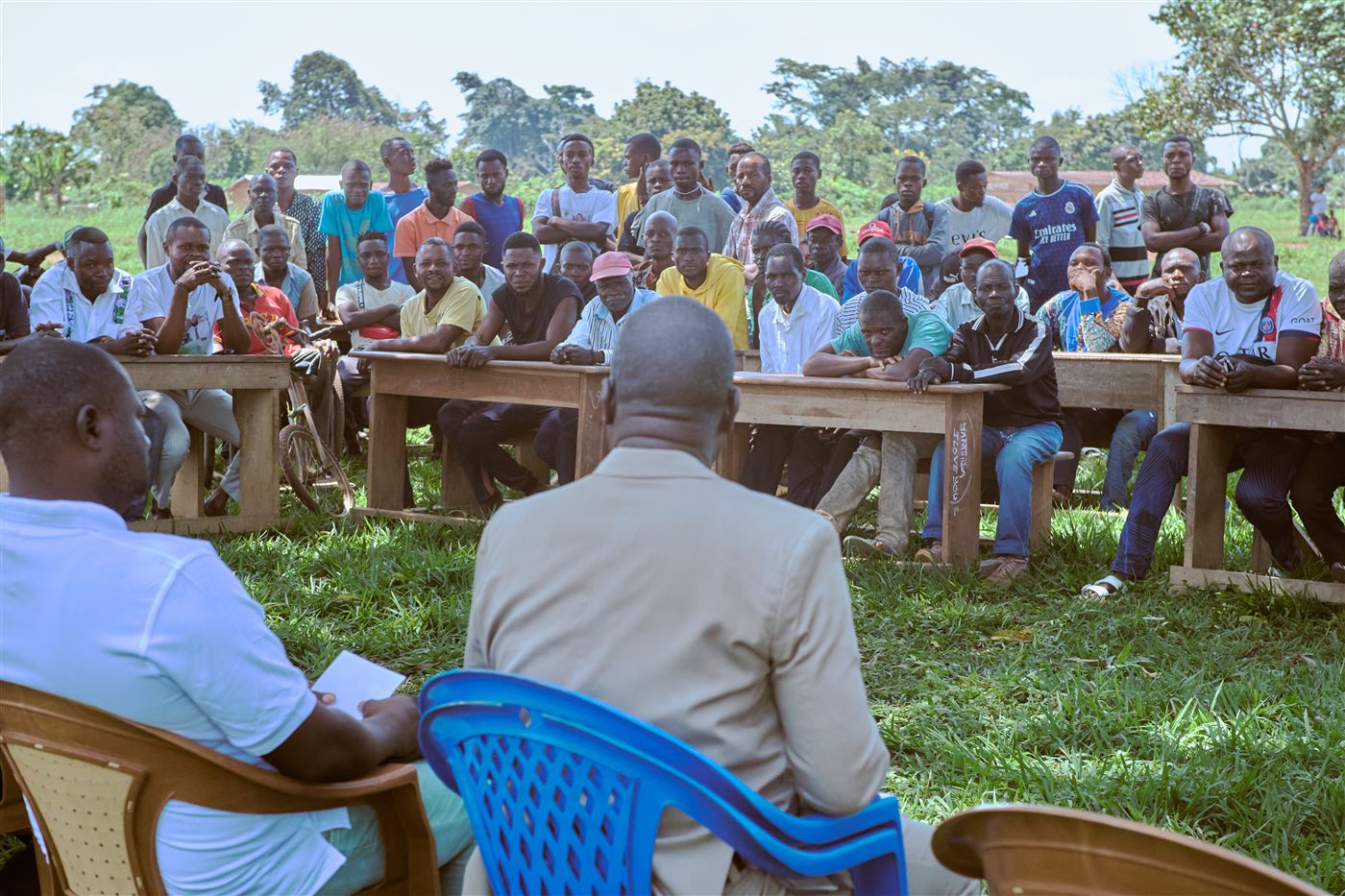
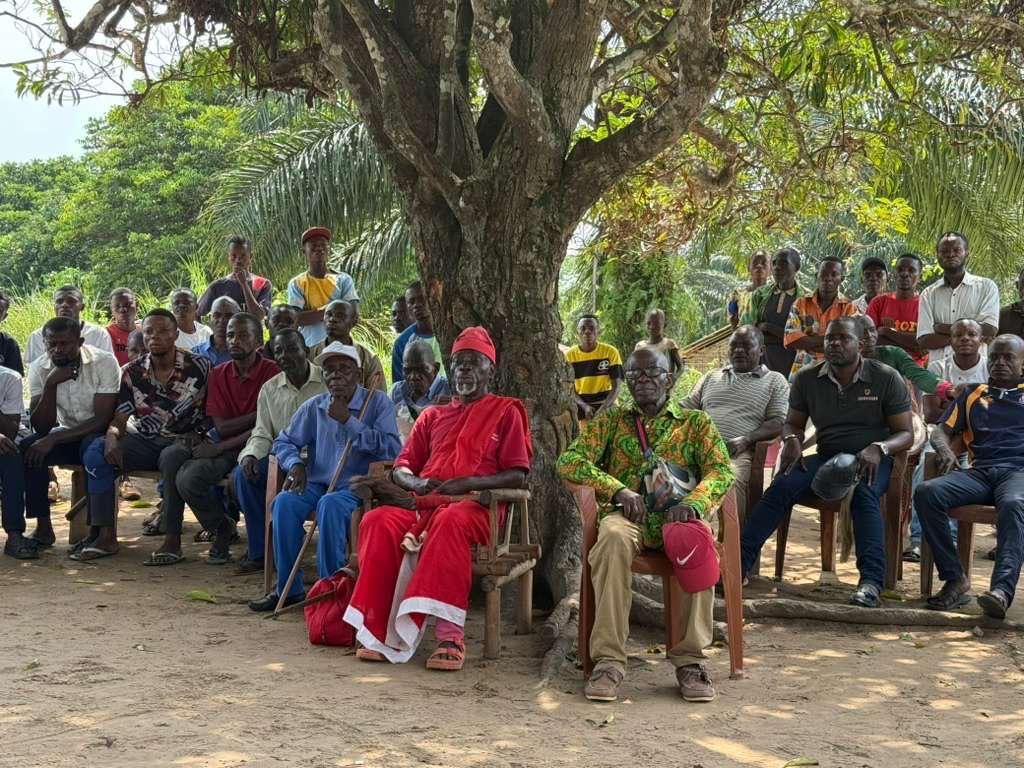
Customary ceremony before the first planting
Before the first trees were planted on the trial plot, the customary landowners held a traditional ceremony in the village. The sub-prefect, the village committee and elders, the local administration and residents took part. Planting began two days later.
Gamboma, March 2025
Information meetings in the villages, before the lease
A State mission of three ministries held information meetings and group discussions in nine villages and marked the boundaries on the ground, before the lease was signed.
Massangui, October 2025
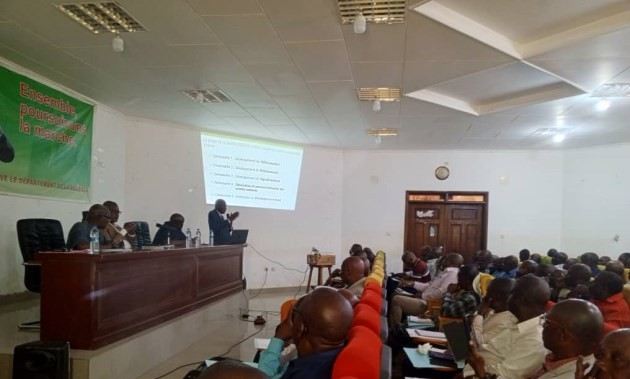
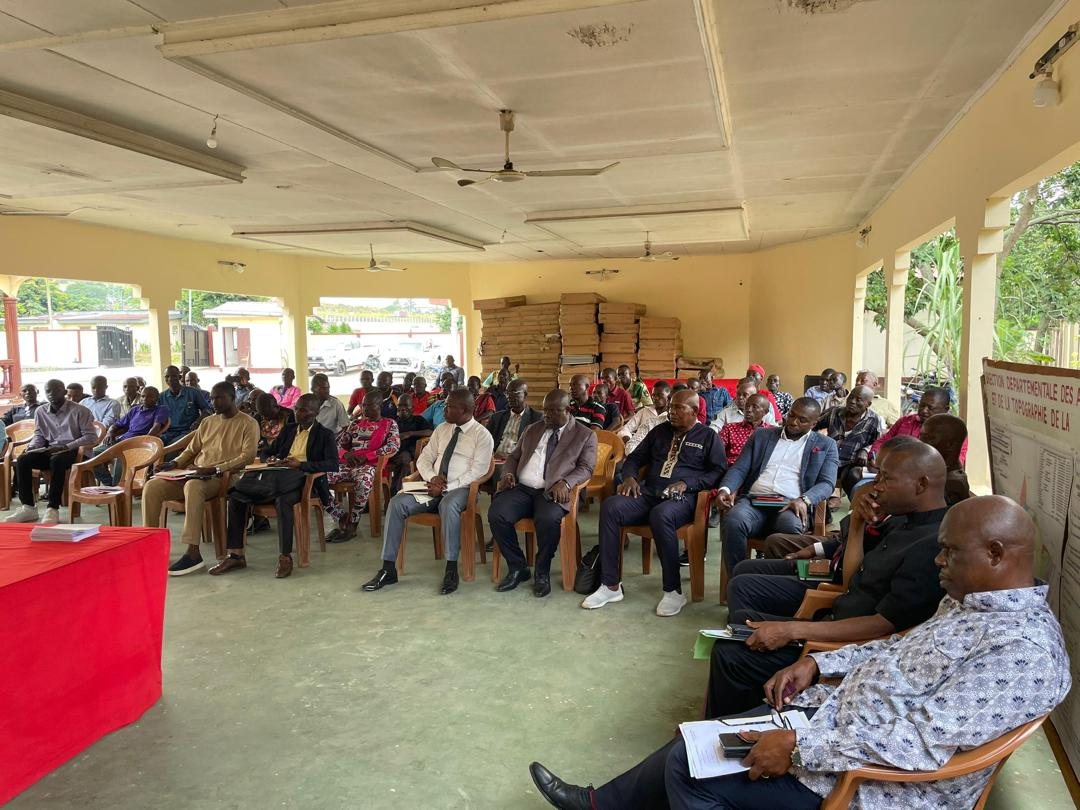
Public meeting with more than 80 delegates
A public meeting held by the Prefecture opened the national impact study, with delegates of the administration, civil society and the villages. Participants raised jobs and training for young people, compensation and customary rights, customs and sacred places, roads and a way to settle disagreements.
Gamboma, February 2026
Village meeting
Residents and customary chiefs met the project team in their village to talk about the project and ask questions.
Gamboma, February 2026
From the villages' requests to the Cahier des Charges
Each district had submitted its requests to the project. At the Prefecture they were discussed with the Ministry of Forest Economy, the local administration and representatives of the village chiefs, and set out in the Cahier des Charges, the document that lists the project's commitments to the villages, signed in February 2026.
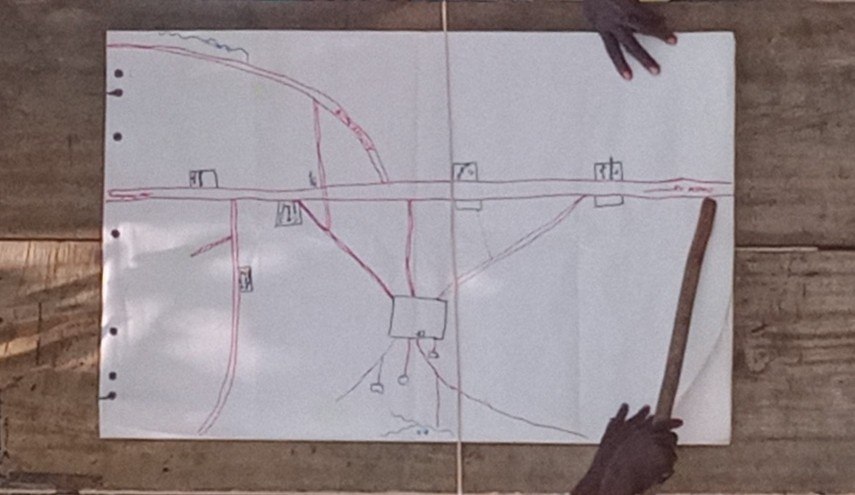
Gamboma, August 2026
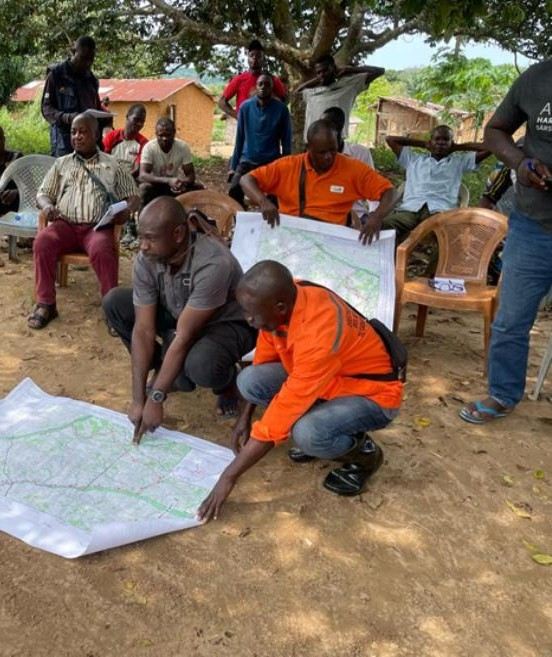
Consultation with an Indigenous community
In line with IFC Performance Standard 7 and the Congolese law on the rights of Indigenous Peoples, the project's ESG manager met an Indigenous community near the concession, separately from the neighbouring village and with an independent mediator chosen by the community. About 50 adults, many of them women, drew on the ground the areas they use for farming, gathering and water, which were then recorded with GPS. Most of these areas lie outside the concession; occasional gathering on its edges was recorded as well. The community also described its needs and concerns.
How we engage
Early and accessible
Information is shared early, in French and in the local languages, orally and visually as well as in writing, so that people can take part before decisions are made.
Inclusive
Women and vulnerable groups are consulted in separate meetings where needed. Every resident can raise a concern directly, without going through a village chief or an authority.
Recorded
Questions and concerns raised in meetings are noted, so that they can be considered as the projects develop.
Several steps are led by the State: the national impact study with its public consultation, the recognition of customary land rights, and the Cahier des Charges. The projects take part in them and add their own consultation where it is needed to meet the IFC Performance Standards.
What is not easy, and how we deal with it
Three difficulties come up again and again.
-
Not everyone can come
Farmers spend most of the day in their fields, so one meeting reaches only part of a village.
What we do
We return several times, hold separate groups for women and also talk with residents informally.
-
Distances and roads
Many villages are far apart and hard to reach, especially in the rainy season.
What we do
Teams go by motorbike where cars cannot pass.
-
More requests than one project can meet
Villages ask for roads, water, schools, health care and jobs, often all at once.
What we do
Priorities are set out with the authorities and village representatives in the Cahier des Charges. We say openly that not every request can be met.
Official documents
The main steps of the projects are set down in official documents, such as the lease, the Cahier des Charges signed with the authorities and village representatives, mission reports of the authorities and minutes of public meetings.
People affected by the projects can ask for them through the form (see Dialogue and grievances). We share what we can, taking into account the rights of the authorities that issued a document, the protection of personal data and confidentiality commitments. Where a document cannot be shared, we explain why and, where possible, give a summary.